Launch offer — valid today only

📄 Digital book in PDF · read it on your phone or print it

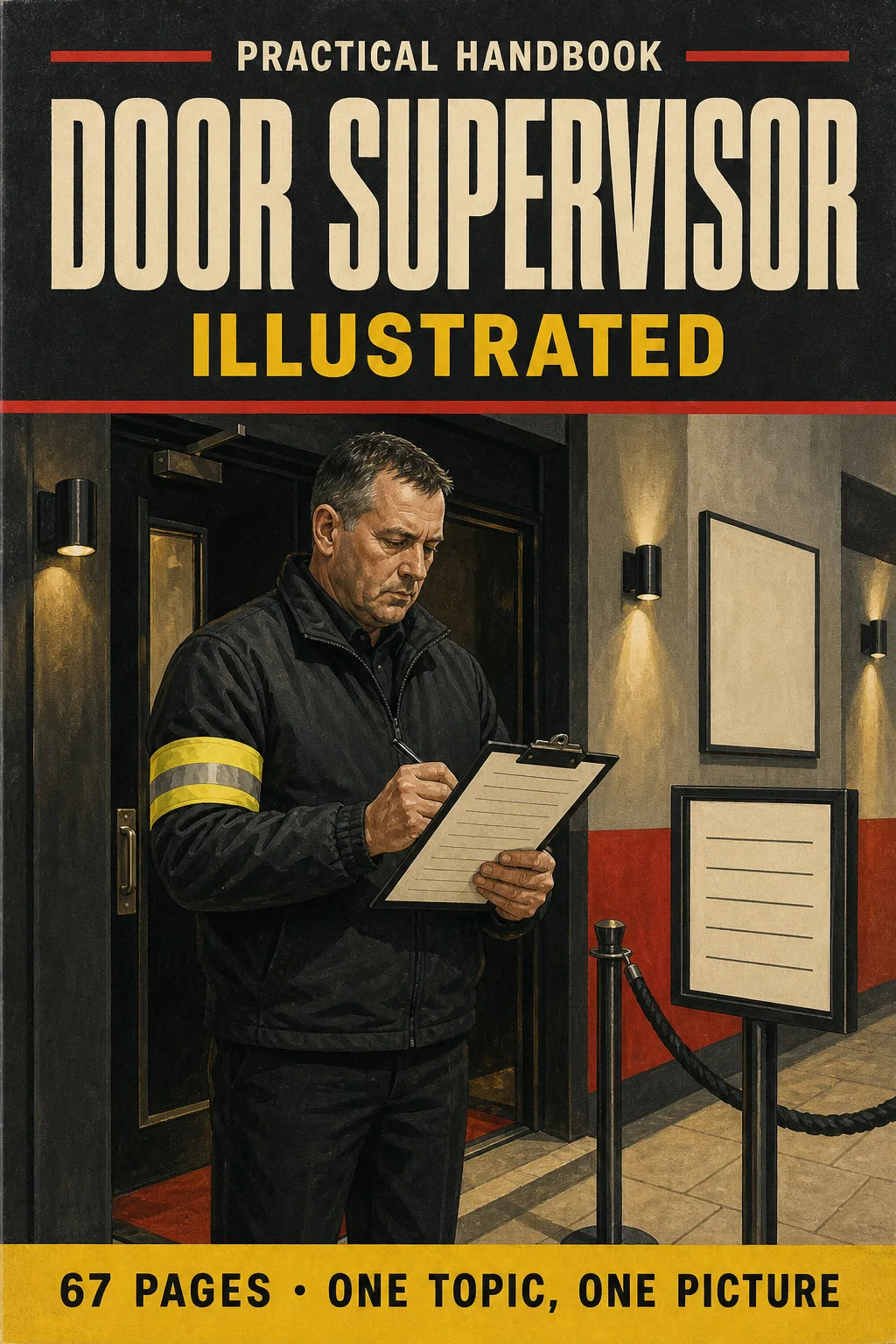
The Level 2 Door Supervisor Course and the Law in Drawings One Topic on Every Page

Your role and licence, the law at the door, refusals and searching, de-escalation, physical intervention basics, vulnerable people and drugs, fire and counter-terrorism, the pocket notebook. Each topic has its own page: the drawing first, then what you need to remember. 67 illustrated pages.

START STUDYING THIS WAY

🔒 Secure checkout · PDF by email · 30-day guarantee

Every topic, its own pageEach rule drawn, with the explanation beside it
67 illustrated pages9 parts, from what a door supervisor does to the final checklist before the exam
Up-to-date sourcesUK government licensing guidance, the Licensing Act 2003 and the Private Security Industry Act 2001
PDF by emailFormat

Look Inside the Book

Every page has a big drawing and a box with the rules and steps you need to know:

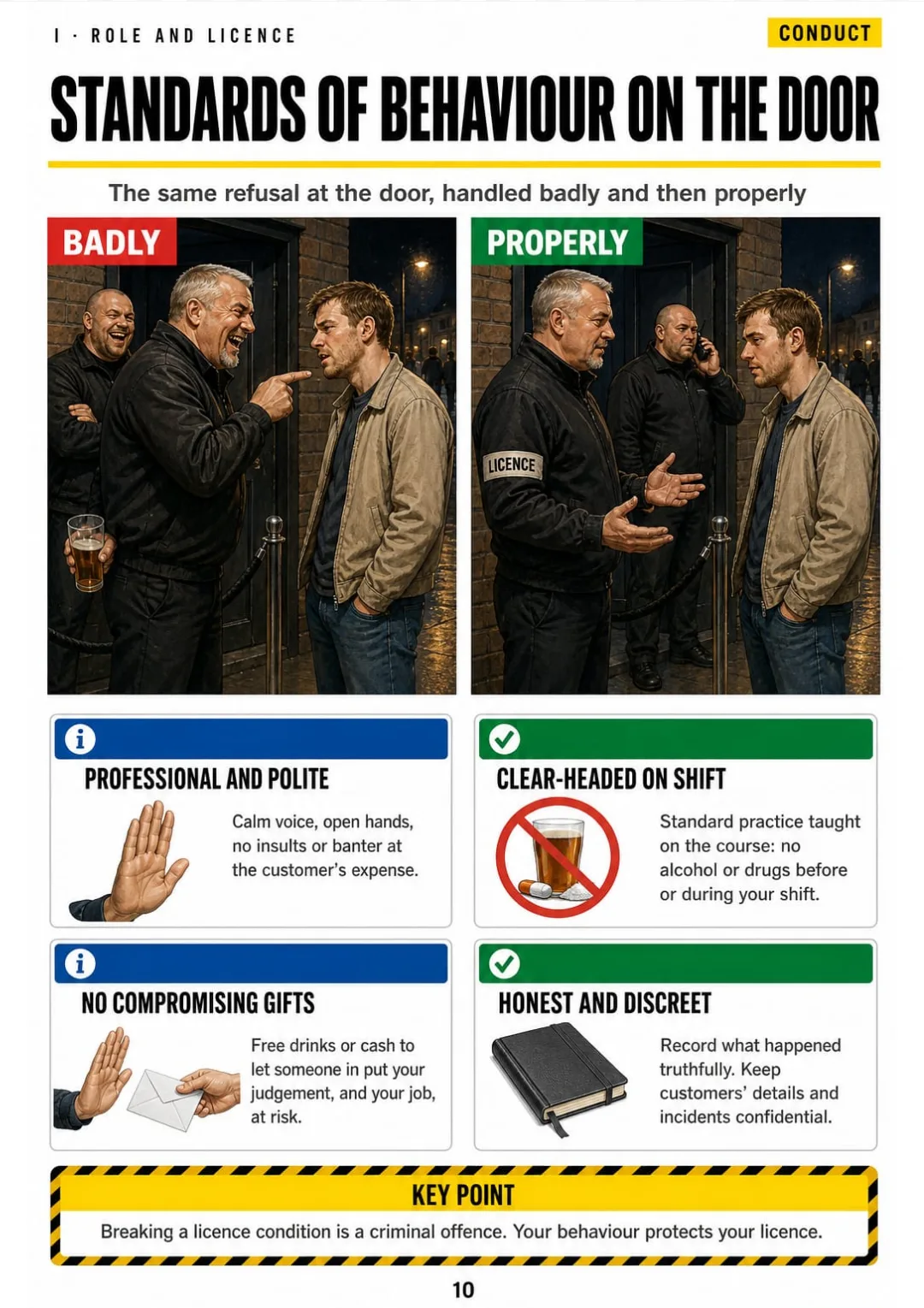
One incident handled badly and properly: polite, clear-headed, honest, no compromising gifts
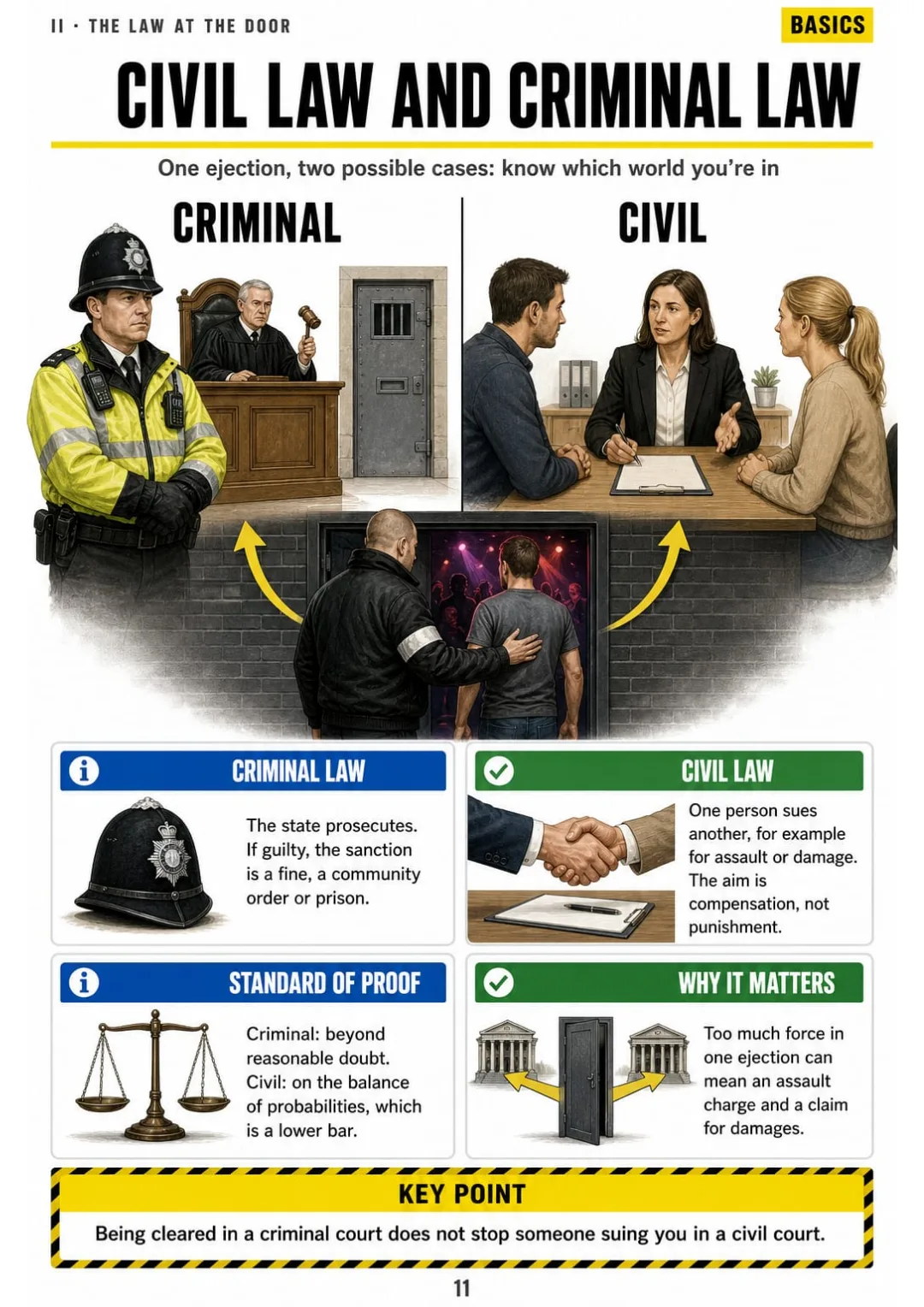
Criminal: the state prosecutes · Civil: one person sues another
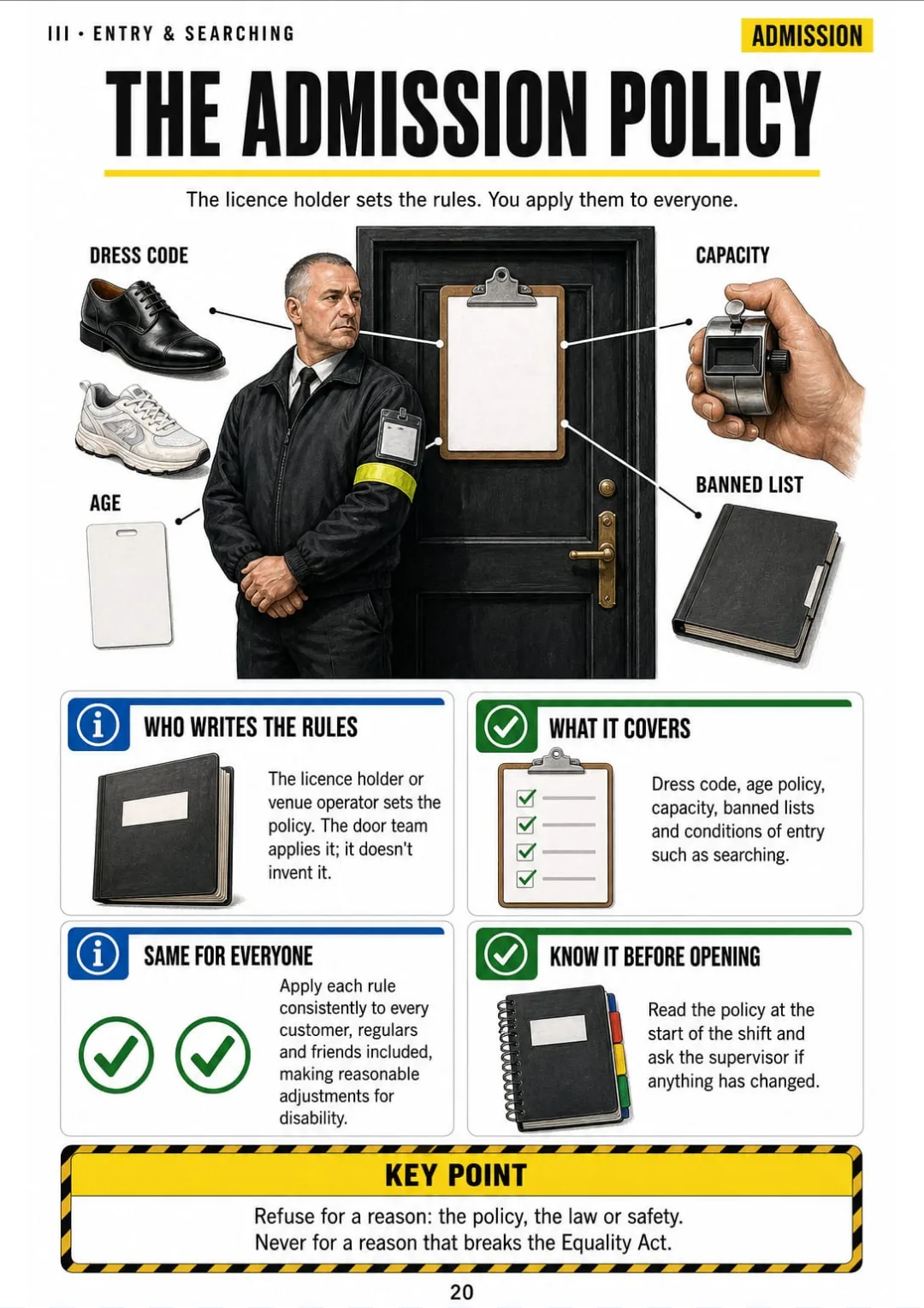
Dress code, age, capacity, banned list: the four rules pinned to the door.
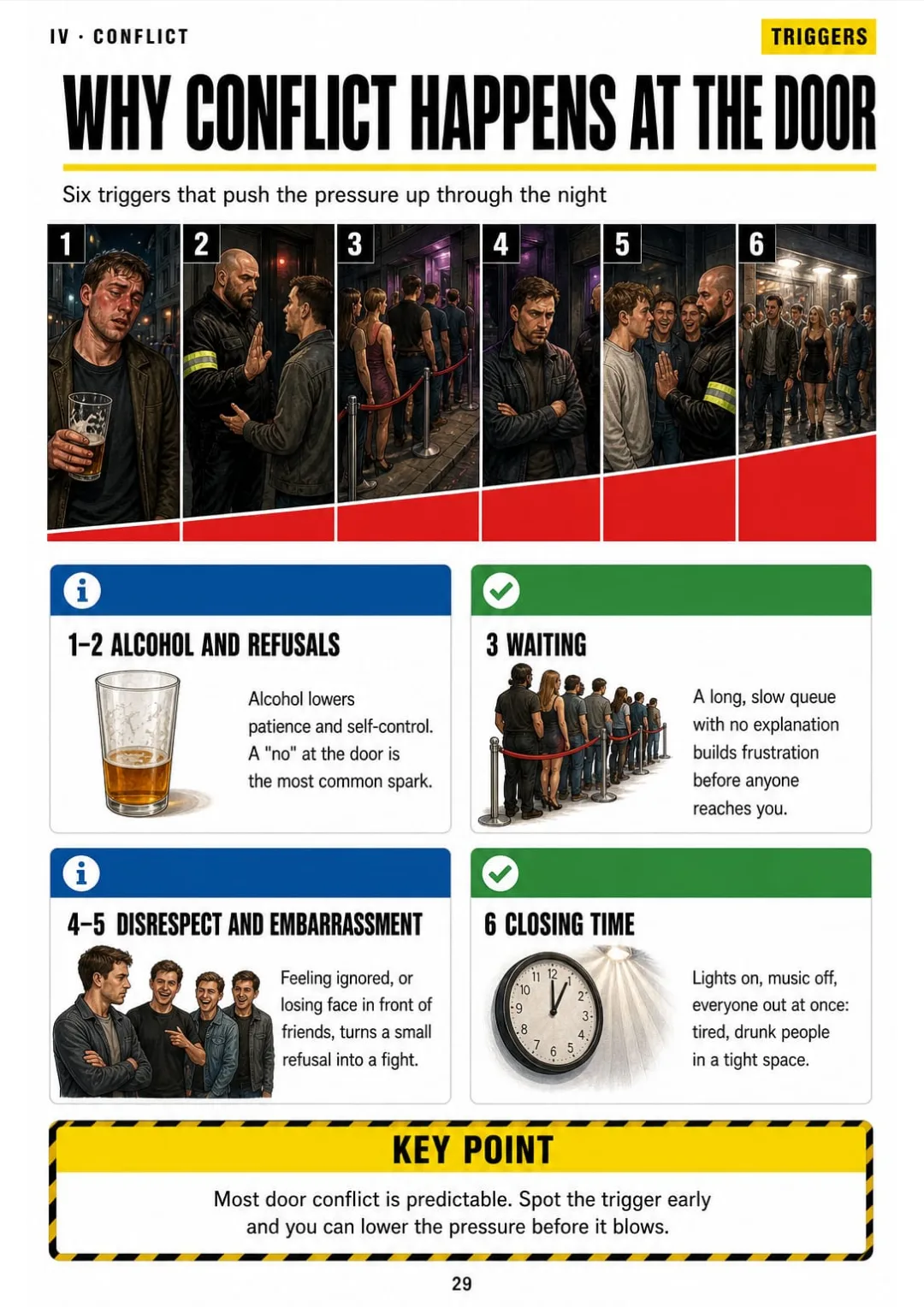
Alcohol, refusals, waiting, disrespect, embarrassment, closing time: the six triggers, in order of the night.
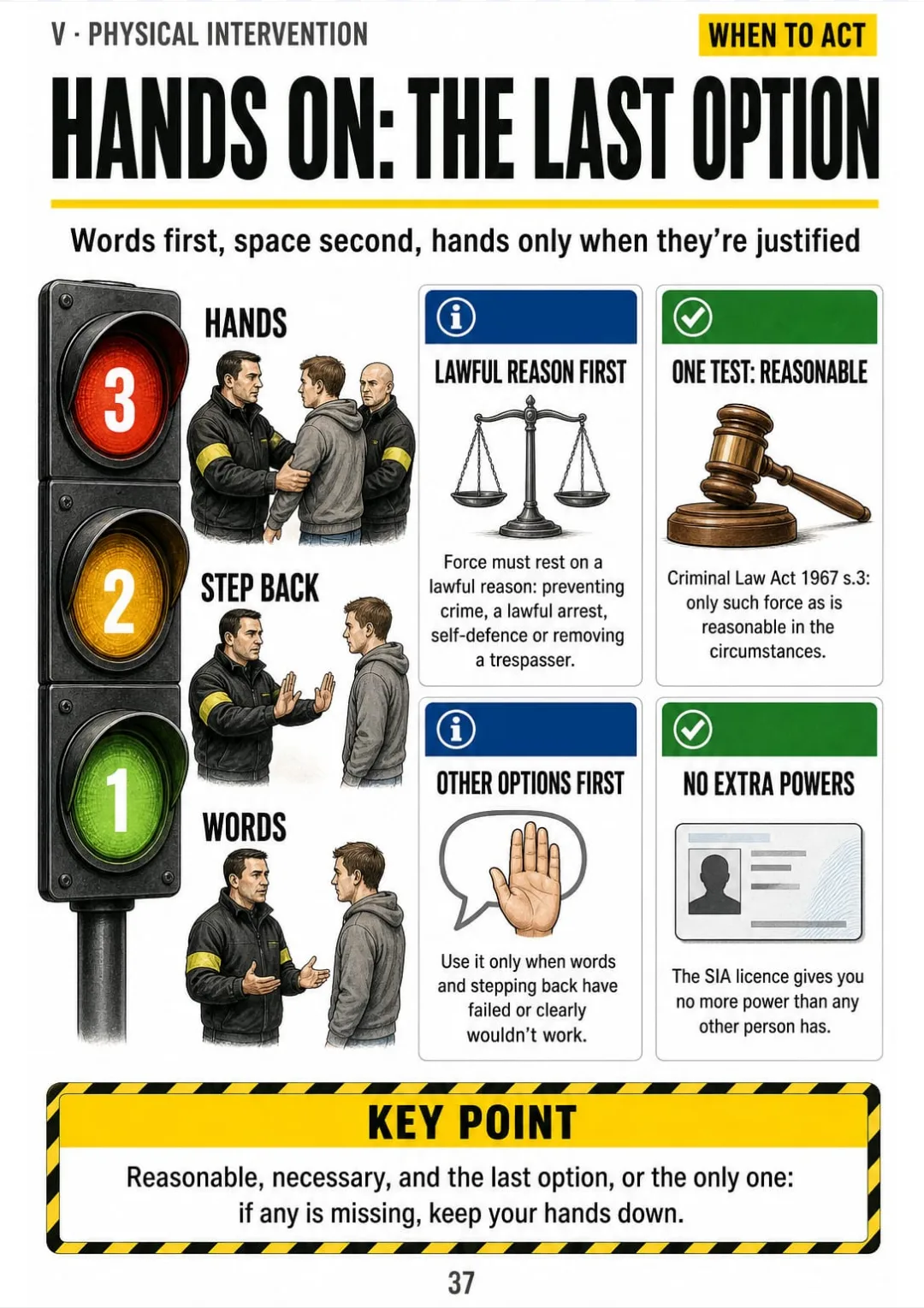
Green, amber, red: when to talk, when to step back, when hands are justified.
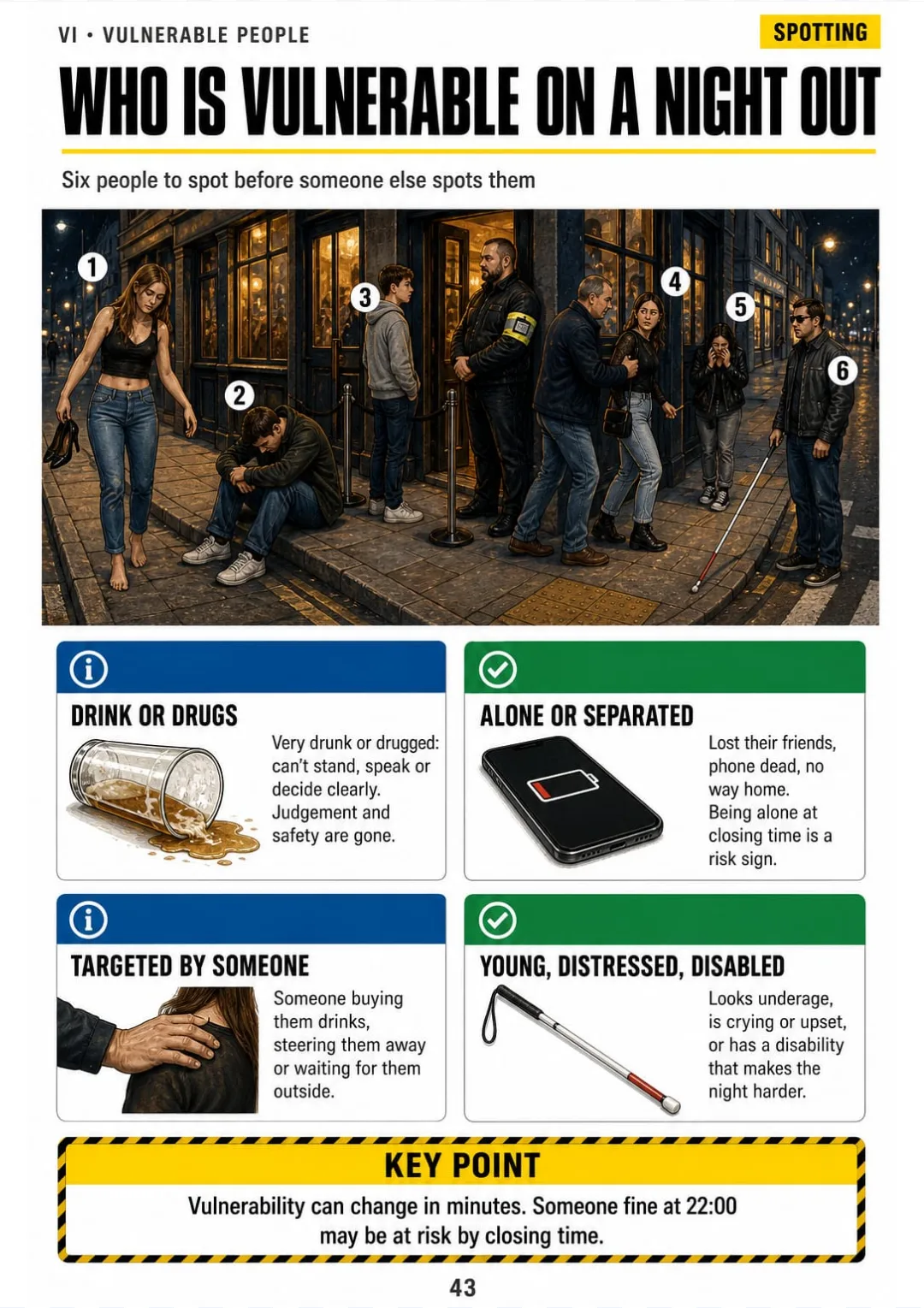
Drunk, alone, underage, targeted, distressed or disabled: six people to spot on one street.
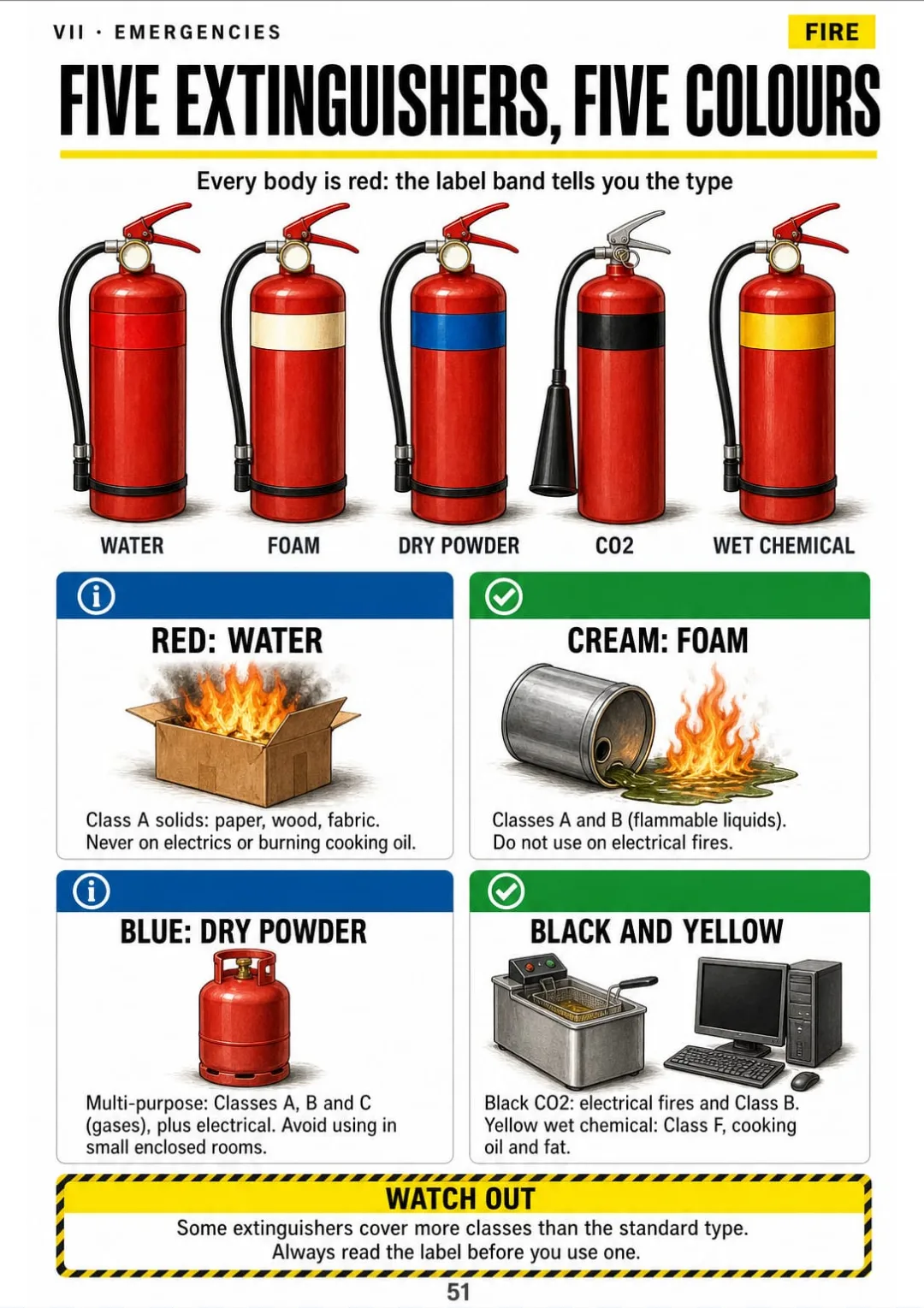
Red water, cream foam, blue powder, black CO2, yellow wet chemical: which fire each one fights.
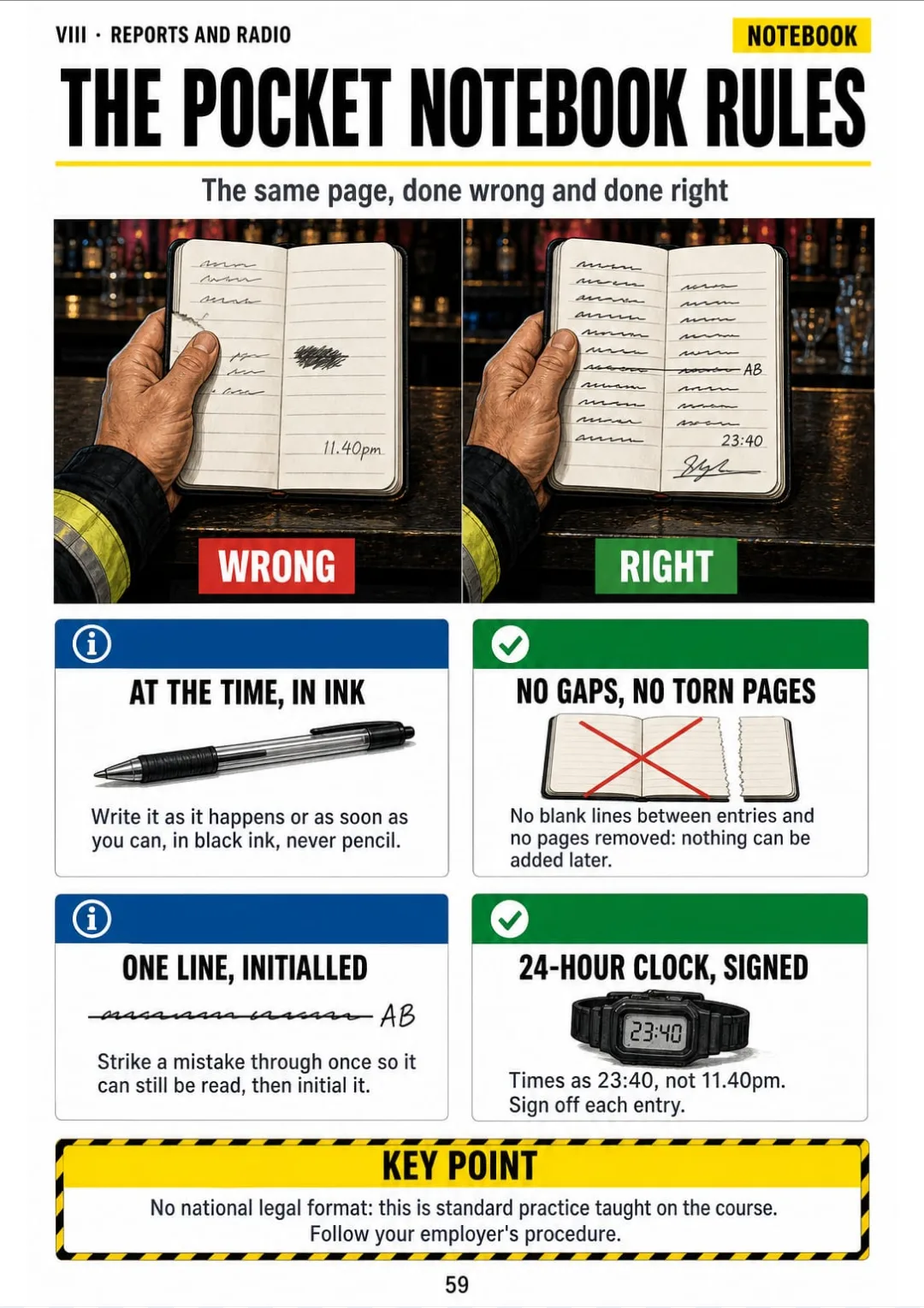
Black ink, no gaps, one-line strike-through and initials, 24-hour clock, signed

Swipe to see more →

These are real pages from the book. The table of contents is the full one: 9 parts and 63 topics.

The Problem Isn't You. It's How It Was Explained to You.

It's Friday night, the queue is building and a man in trainers wants in. You've got a second to decide if the admission policy lets him through.

In the manual, the admission policy is pages of paragraphs: dress code in one place, age in another, capacity and the banned list further on. Read at midnight after a shift, it all blurs into one.

Dress code, age, capacity, banned list: the four rules pinned to the door.

In the book, the admission policy is one page: dress code, age, capacity, banned list, the four rules pinned to the door, each with its own drawing.

Same with civil and criminal law, the six triggers of conflict, the five extinguisher colours, who is vulnerable on a night out and the pocket notebook rules: each one on its own page.

You look at the page, you see the four rules, and at the door you check them in the same order. No flicking back to the manual.

COMPARE FOR YOURSELF

The Same Topic, Two Ways to Study It

THIS
  • The manual: line after line
  • Civil and criminal law explained only in words
  • You walk into the exam still unsure
The distinction between civil and criminal law is fundamental to the role of the door supervisor. Criminal law concerns conduct deemed harmful to society as a whole, in which proceedings are brought by the state, normally through the Crown Prosecution Service, and which may result in penalties including fines or imprisonment. Civil law, by contrast, governs disputes between private individuals or organisations, in which the claimant seeks a remedy, such as compensation, from the defendant, the standard of proof being the balance of probabilities rather than beyond reasonable doubt.
FOR THIS
  • Civil and criminal law in one drawing
  • Who prosecutes and who sues, in a box
  • You see it and you get it
Criminal: the state prosecutes · Civil: one person sues another
CONTENTS

Take a Look at the 9 Parts and 63 Topics

Your role and licence, the law at the door, entry and searching, conflict, physical intervention, vulnerable people, emergencies, reports and an exam review: 67 pages, all illustrated.

IYour Role and Your Licence · pp. 5-10
  1. What a door supervisor actually does
  2. The Private Security Industry Act 2001
  3. The licence: who needs it and how long it lasts
  4. Wearing and showing your licence
  5. Renewal and top-up training
  6. Standards of behaviour on the door
IIThe Law at the Door · pp. 11-19
  1. Civil law and criminal law: two different worlds
  2. Licensing Act 2003: the four objectives
  3. Scotland is different
  4. Offences on licensed premises
  5. Reasonable force: the one test
  6. Citizen's arrest: when you can and when you can't
  7. After an arrest: what you must do
  8. Equality Act 2010 at the door
  9. Data protection, CCTV and body cameras
IIIEntry, Refusals and Searching · pp. 20-28
  1. The admission policy
  2. Checking ID and the Challenge 25 idea
  3. Refusing entry calmly
  4. Capacity and counting in
  5. Searching: consent and condition of entry
  6. The person search, step by step
  7. Searching bags and property
  8. What you find: weapons, drugs, stolen goods
  9. Searching with respect: special cases
IVConflict and De-escalation · pp. 29-36
  1. Why conflict happens at the door
  2. The attitude and behaviour cycle
  3. Reading the warning signs
  4. Space and the reactionary gap
  5. The de-escalation ladder
  6. Words that cool and words that ignite
  7. Asking someone to leave
  8. After the conflict
VPhysical Intervention: The Basics · pp. 37-42
  1. Physical intervention as the last option
  2. Risks of restraint
  3. Signs of a medical emergency during restraint
  4. Guiding and escorting
  5. Ejecting a trespasser safely
  6. Recording use of force
VIVulnerable People, Drugs and Crime Scenes · pp. 43-50
  1. Who is vulnerable on a night out
  2. Helping a vulnerable person
  3. Spiking: signs and what to do
  4. Sexual harassment and predatory behaviour
  5. Children and young people at the venue
  6. Drugs: the main groups you'll meet
  7. Handling seized drugs
  8. Preserving a crime scene
VIIEmergencies and Counter-Terrorism · pp. 51-58
  1. Fire: the five extinguisher colours
  2. Evacuation and the assembly point
  3. Emergency first aid on the door
  4. The terror threat: what door staff watch for
  5. Suspicious items: is it HOT?
  6. Run, hide, tell
  7. The Terrorism (Protection of Premises) Act 2025
  8. Lockdown and invacuation
VIIIReports, Radio and the Shift · pp. 59-63
  1. The pocket notebook rules
  2. The incident report, line by line
  3. The radio and the phonetic alphabet
  4. Start of shift to closing time
  5. Dispersal and the street outside
IXExam Review · pp. 64-67
  1. How the multiple-choice exam works
  2. Door supervisor or police officer? The power check
  3. The laws on one page
  4. Final checklist before the course and the exam

One Page, One Topic, All Clear

Think of it this way:

It's half past one, the music's off and a customer won't leave. You need to know, right now, what you can do and what you can't.

In the book you open the page on asking someone to leave and it's drawn: the calm words, the space you keep, the moment you step back and call for support.

Green, amber, red: when to talk, when to step back, when hands are justified.

Reasonable force, citizen's arrest, the person search, spiking, run, hide, tell: you find each one by its title in the index, and the drawing you studied is the one you remember on the night.

Door Supervisor Illustrated is 9 parts and 63 topics, all drawn, and at the end an exam review with the power check and the laws on one page.

What you see drawn, you don't have to memorize.

What's Inside Door Supervisor Illustrated:

Ipp. 5-10

Your Role and Your Licence

What the job actually is, the 2001 Act, who needs a licence, wearing it, renewal and refresher training, standards on the door.

IIpp. 11-19

The Law at the Door

Know what the law lets you do at the door: civil and criminal law, the four licensing objectives, Scotland, offences on licensed premises, reasonable force, citizen's arrest, equality and data protection, each on its own page.

IIIpp. 20-28

Entry, Refusals and Searching

The admission policy, ID and Challenge 25, refusing calmly, capacity, search consent, the person and bag search, what you find, special cases.

IVpp. 29-36

Conflict and De-escalation

See trouble coming and talk it down: why conflict starts, the attitude and behaviour cycle, warning signs, the reactionary gap, the de-escalation ladder, the right words and asking someone to leave.

Vpp. 37-42

Physical Intervention: The Basics

Hands on as a last resort, the risks of restraint, medical warning signs, guiding and escorting, ejecting safely, recording force.

VIpp. 43-50

Vulnerable People, Drugs and Crime Scenes

Who is vulnerable, how to help, spiking, sexual harassment, children at the venue, the main drug groups, seized drugs, crime scenes.

VIIpp. 51-58

Emergencies and Counter-Terrorism

The five extinguisher colours, evacuation, emergency first aid, the terror threat, suspicious items, run, hide, tell, the Terrorism (Protection of Premises) Act 2025, lockdown and invacuation.

VIIIpp. 59-63

Reports, Radio and the Shift

The pocket notebook rules, the incident report line by line, the radio and the phonetic alphabet, the shift from start to close, dispersal.

IXpp. 64-67

Exam Review

How the multiple-choice exam works, what you can do vs what only the police can do, the laws on one page and the final checklist.

At the end of the book: An exam review part: what a door supervisor can do vs what only the police can do, the laws on one page and a final checklist.
Plus: 2 Free Books

Door Supervisor Practice Questions

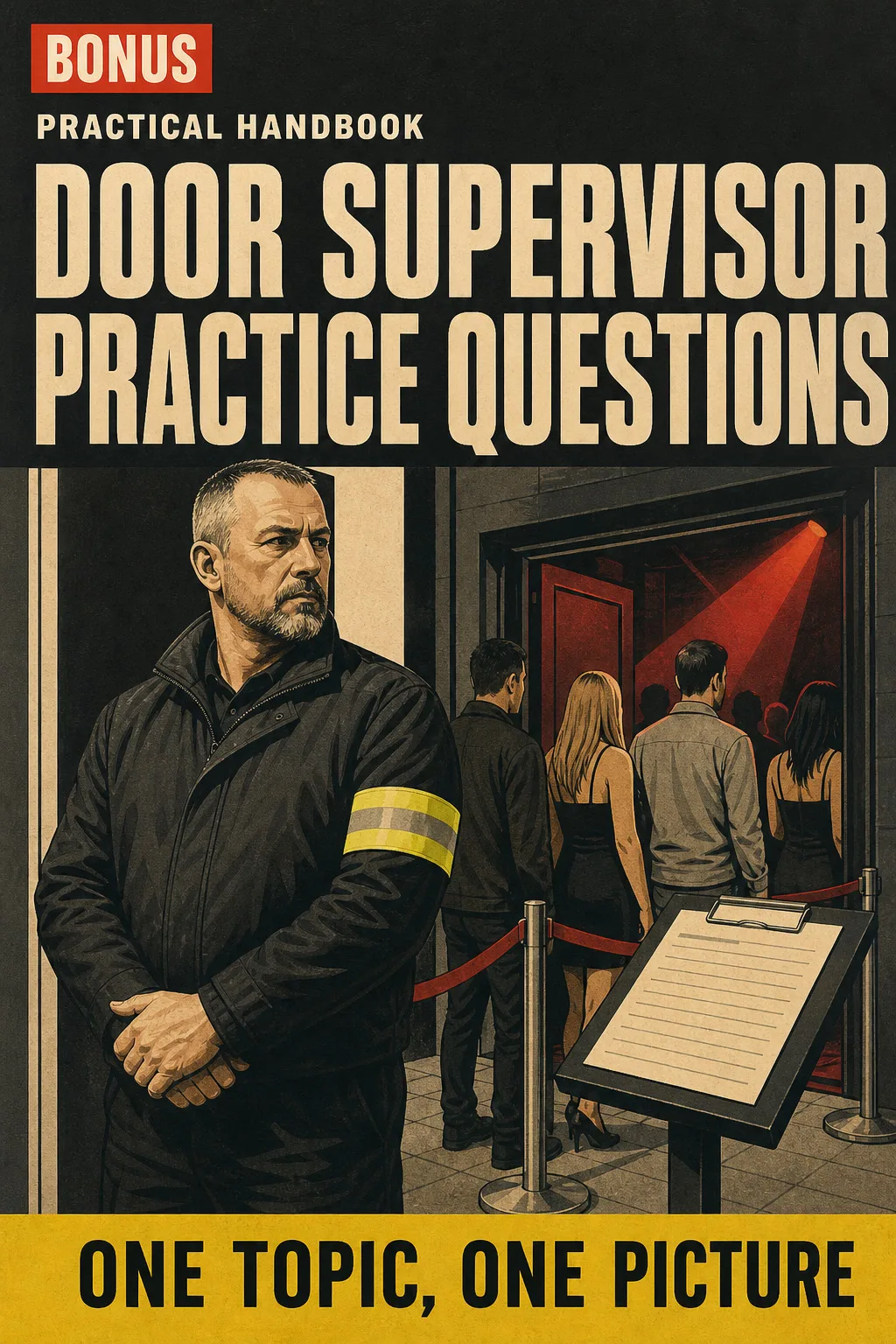
BONUS 1: «Door Supervisor Practice Questions»

Value on its own: US$ 17.90

Exam-style multiple-choice questions on every unit, with the answer explained, so you can find your weak topics before the real test.

The 15 Most Common Door Mistakes: Before & After

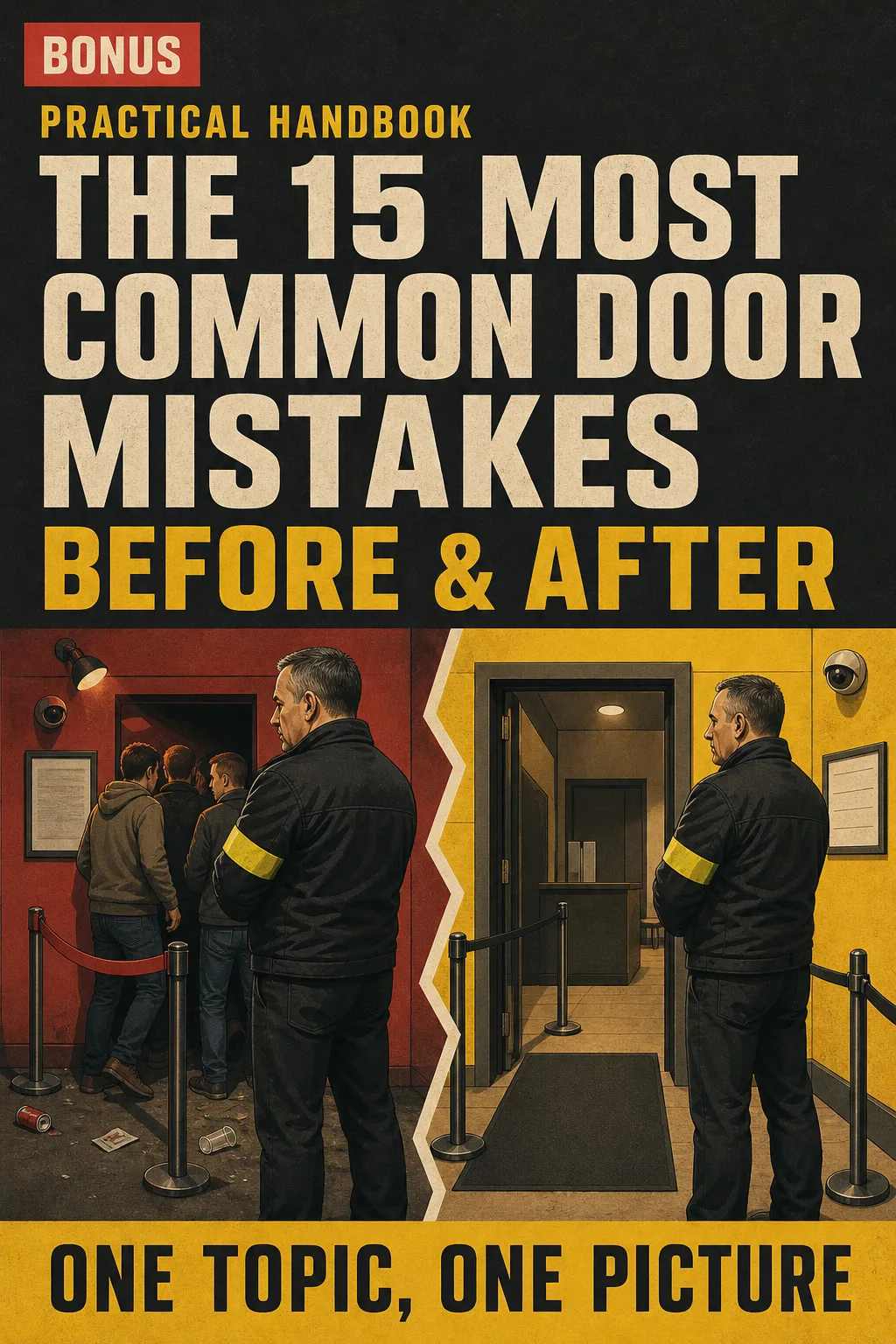
BONUS 2: «The 15 Most Common Door Mistakes: Before & After»

Value on its own: US$ 14.90

The mistakes new door staff make most often, each drawn wrong and then right, so you can go over them at a glance the night before.

Door Supervisor Illustrated with 2 Free Books

  • Door Supervisor Illustrated: 67 illustrated pagesUS$ 63
  • BONUS 1: Door Supervisor Practice QuestionsUS$ 17.90
  • BONUS 2: The 15 Most Common Door Mistakes: Before & AfterUS$ 14.90
  • High-resolution PDF to printIncluded
Total value US$ 95.80
YOUR PRICE:
US$ 27
You save US$ 68.80
YES, I WANT DOOR SUPERVISOR ILLUSTRATED FOR US$ 27

📄 This is a digital PDF book sent to your email: nothing is printed or shipped.

Secure purchaseEncrypted payment30-day guarantee

PDF by email: We email you Door Supervisor Illustrated as a PDF, together with the two free books. It's a single payment: no installments, no extra charges.

Who This Book Is For

You're on the Level 2 course

You're on the Level 2 course

Each unit of the course on its own page, drawn, so you can go over it at night after work without wading through the manual.

Your exam is days away

Your exam is days away

What you can do vs what only the police can do, the laws on one page and the final checklist, so you walk in knowing every topic in the same order.

You already work the door

You already work the door

Renewing your licence and doing the refresher training? The law, first aid and counter-terrorism back in order, one page each, to keep at hand.

Everything You Get Today

US$ 95.80US$ 27
YES, I WANT DOOR SUPERVISOR ILLUSTRATED FOR US$ 27

📄 This is a digital PDF book sent to your email: nothing is printed or shipped.

30DAYS
GUARANTEE

30-Day Guarantee

Try Door Supervisor Illustrated for 30 days, bonus books included.

We refund everything if the file won't open, if the book isn't what you see here, if you were charged twice or if the email doesn't arrive. Just email us.

You pay once. No subscriptions.

Frequently Asked Questions

Is it for me if I haven't sat a written exam in decades?

Yes. Every topic is one page with a drawing and a short box of what to remember, always in the same order. It follows the topics of the Level 2 Award for Working as a Door Supervisor, whichever awarding organisation your centre uses.

Where does the content come from?

It's checked against current UK government guidance on door supervisor licensing and training, including the refresher training you need to renew, and UK legislation: the Private Security Industry Act 2001, the Licensing Act 2003, the Criminal Law Act 1967, the Equality Act 2010 and the Terrorism (Protection of Premises) Act 2025. Where a rule or time limit can change, the page says so, so you can confirm it with your trainer.

Is it official material?

No. It's independent study material, not affiliated with the Security Industry Authority, any awarding organisation or any government body.

I already have the course manual. Why this book, and does it replace the course?

It doesn't replace the manual or the course: it's the same topics, one page each and drawn, to go over at night and before the exam. It gives no certificate or licence: for that you still need the Level 2 course with an approved training provider and to pass its exams. It doesn't replace emergency first aid training or practical physical intervention training with an instructor: the book only draws the risks and warning signs, it doesn't teach restraint techniques.

Are the practice questions the ones in the exam?

No. They're written for this book, in the style of the multiple-choice exam, to help you find your weak topics. They aren't official exam questions.

When and how does it arrive?

As a PDF by email, to the address you enter at checkout.

Do I have to pay every month?

No. It's a one-off payment.

Can I have it on paper?

Yes. It's a PDF ready to print, at home or at a print shop, so you can keep it at hand.

How does the refund work?

You have 30 days. We refund everything if the file won't open, if the book isn't what you see on this page, if you were charged twice or if the email doesn't arrive: just email us.

Before You Close This Page

No more rereading with nothing sticking.

The search, the refusal, the notebook rules: you see them drawn and that's it.

You get to the course and the exam knowing where everything is.

Drawings make studying faster.

The book is right below.

One-time payment: US$ 27 · Guarantee: 30 days · PDF by email

YES, I WANT DOOR SUPERVISOR ILLUSTRATED FOR US$ 27

📄 This is a digital PDF book sent to your email: nothing is printed or shipped.